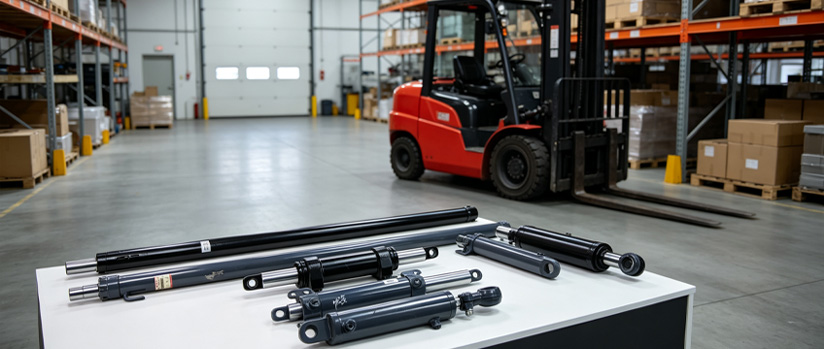
A hydraulic cylinder is one of the most important components of a hand pallet truck. It converts hydraulic pressure into lifting force, allowing the forks to raise and lower pallets smoothly.
Over time, the hydraulic cylinder may develop problems such as oil leakage, slow lifting, insufficient lifting height, or failure to hold the forks in position. When these problems occur, replacing the hydraulic cylinder can often restore the pallet truck's lifting performance without replacing the entire unit.
In this guide, we explain how to replace a hand pallet truck hydraulic cylinder and what to check before and after installation.
Not every lifting problem means that the cylinder needs to be replaced. Before purchasing a replacement, inspect the complete hydraulic system.
Common signs of a damaged or worn hydraulic cylinder include:
Oil leaking around the cylinder or piston rod is one of the most common signs of seal failure.
Small leaks may initially have little effect on lifting performance, but continued leakage can eventually cause insufficient hydraulic pressure.
If the forks cannot reach their normal maximum height, the problem may be related to the hydraulic cylinder, pump, valve or insufficient hydraulic oil.
If the forks gradually lower after being raised, there may be an internal hydraulic leak, damaged seals or a problem with the hydraulic valve.
A pallet truck that requires excessive pumping or lifts very slowly may have problems with the hydraulic system.
The cylinder should be inspected together with the pump and hydraulic oil before replacement.
A bent piston rod, seriously scratched surface or damaged cylinder body can affect sealing performance and may require cylinder replacement.
The exact procedure can vary between pallet truck models, but the following steps provide a general reference.
Park the hand pallet truck on a stable and level surface.
Remove any load from the forks and lower the forks completely.
Make sure the pallet truck is stable before beginning maintenance.
If the hydraulic system contains residual pressure, release the pressure according to the manufacturer's recommended procedure.
Before removing the cylinder, identify the cause of the problem.
Check:
This step is important because replacing the cylinder will not solve a problem caused by the pump or release valve.
Place a suitable container underneath the hydraulic system if oil needs to be drained.
Carefully disconnect the relevant hydraulic connection and prevent oil from spreading onto the floor.
Keep the work area clean because dirt entering the hydraulic system can damage valves and seals.
Locate the mounting points connecting the cylinder to the pallet truck frame or lifting mechanism.
Remove the retaining pins, bolts, circlips or other fixing components.
Depending on the pallet truck design, additional components may need to be removed before the cylinder can be taken out.
Carefully remove the old cylinder and inspect the surrounding components for wear or damage.
Before installing the new cylinder, compare it with the old component.
Check:
Even a small dimensional difference can affect installation or lifting performance.
For B2B spare parts purchasing, providing the pallet truck model, cylinder dimensions and photos to the supplier can help reduce the risk of selecting the wrong part.
Position the replacement cylinder correctly and align the mounting holes.
Install the original pins, bolts, circlips or other fixing components.
Make sure the cylinder is properly aligned with the lifting mechanism. A misaligned cylinder can create abnormal stress and accelerate wear.
Reconnect the hydraulic line and tighten the connection securely.
Avoid excessive tightening, which may damage threads or hydraulic fittings.
If hydraulic oil was drained during the replacement, refill the system with the appropriate hydraulic oil.
Use the oil specification recommended for the pallet truck.
Avoid mixing incompatible hydraulic fluids.
The correct oil level is important for maintaining stable lifting performance.
Air may enter the hydraulic system during cylinder replacement.
Operate the handle and lifting mechanism several times without a load to help remove trapped air.
Check the system for:
Continue checking until the lifting action becomes smooth.
After installation, perform a complete functional test.
First test the pallet truck without a load.
Check whether the forks:
After confirming normal operation, perform a controlled load test according to the equipment's rated capacity and maintenance procedures.
Do not exceed the pallet truck's rated load capacity.
For distributors, repair companies and material handling equipment suppliers, choosing the correct hydraulic cylinder is especially important.
Before ordering, collect as much information as possible, including:
1. Pallet truck brand and model
For example, different models may use different hydraulic cylinder dimensions.
2. Cylinder dimensions
Measure the overall length, cylinder diameter and piston rod diameter.
3. Mounting dimensions
Check mounting holes, pins, threads and connection positions.
4. Lifting height
The replacement cylinder should provide the required fork lifting height.
5. Photos
Clear photos of the original cylinder and mounting position can help suppliers identify the correct replacement.
6. Required quantity
For distributors, purchasing multiple units together may help improve stock availability and simplify future maintenance.
Proper maintenance can extend the service life of a hand pallet truck hydraulic system.
Prevent dust, metal particles and other contaminants from entering the hydraulic system.
Early detection of leakage can prevent more serious hydraulic problems.
A scratched, bent or corroded piston rod can damage seals and cause hydraulic oil leakage.
Always operate the pallet truck within its rated capacity. Excessive loads can increase stress on the hydraulic system.
Regularly inspect and lubricate the appropriate pivot points and moving components according to the equipment maintenance requirements.
For serviceable hydraulic cylinders, replacing worn seals at the appropriate time can help maintain hydraulic performance.
Replacing a hand pallet truck hydraulic cylinder is a practical maintenance procedure when the cylinder has serious leakage, damaged seals, insufficient lifting performance or other mechanical problems.
The key steps are identifying the hydraulic problem, removing the old cylinder, checking the replacement dimensions, installing the new cylinder correctly, refilling hydraulic oil, removing trapped air and testing the pallet truck before returning it to service.
For businesses sourcing pallet truck hydraulic cylinders and other forklift spare parts, accurate model information and dimensional specifications are essential for selecting the correct replacement.
Lifttops supplies forklift parts and pallet truck parts for B2B customers, covering hydraulic components, wheels, handle assemblies, electrical parts, controllers, batteries, chargers and other material handling equipment spare parts. With factory-direct supply, strict quality inspection, stable supply capacity and professional technical support, we support distributors, repair companies and equipment service providers with replacement parts for different material handling applications.
Looking for a replacement hand pallet truck hydraulic cylinder? Contact our team with your pallet truck model, cylinder dimensions and photos for product matching and quotation.
Get Latest Deals from Anhui LiftTop Mechanical and Electrical

Send Us Email
Email : simon@lifttops.com
Address


 IPv6 network supported


 English
 English
 français
 русский
 español
 português
 العربية