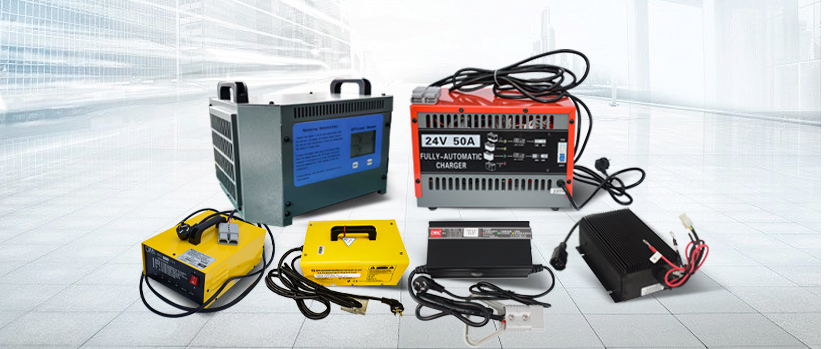
Electric forklifts, pallet trucks, and other warehouse equipment depend heavily on batteries for daily operations. However, the performance and lifespan of these batteries are closely related to the quality of the charger used. A well-matched battery charger ensures efficient energy transfer, protects the battery from damage, and helps maintain consistent equipment performance.For businesses operating electric material handling equipment, choosing the right charger is just as important as selecting the right battery.
Industrial equipment commonly uses batteries such as:lead-acid traction batteries、Lithium-ion batteries、AGM or gel batteries.
Each type of battery has its own charging characteristics, so the charger must be designed specifically for that battery technology.
Match the Charger Voltage to the Battery
Voltage compatibility is one of the most critical factors when selecting a charger. The charger must match the nominal voltage of the battery system.
Typical voltage ranges for industrial equipment include:
12V batteries for smaller devices
24V systems used in pallet trucks
36V and 48V systems in electric forklifts
Higher-voltage systems used in heavy-duty equipment
Using the wrong voltage charger can result in incomplete charging, overheating, or battery deterioration.
The charging current determines how quickly the battery can be recharged. A charger with the correct output current ensures efficient charging while preventing excessive stress on the battery.
As a general guideline, the charging current is often calculated based on the battery capacity. A properly sized charger will balance charging speed and battery protection, which is essential for maintaining long-term battery health.
Energy efficiency is another important consideration, especially in warehouses where multiple batteries are charged daily. High-efficiency chargers reduce power loss during charging and help lower electricity costs.
Compared with older conventional chargers, newer high-frequency chargers generally offer:faster charging performance,improved energy conversion efficiency,lower heat generation,compact desigh.These advantages make them widely used in modern industrial charging systems.
Conclusion
Choosing a high-quality battery charger is essential for protecting industrial batteries and maintaining efficient equipment operation. By carefully evaluating battery type, voltage compatibility, charging current, efficiency, and safety features, businesses can select the most suitable charging solution for their needs.
A reliable charger not only extends battery life but also improves productivity and reduces long-term operating costs in warehouse and logistics operations.
Work with a Professional Supplier
At Lifttops, we supply a wide range of forklift spare parts and warehouse equipment components, including electrical parts, battery chargers, controllers, switches, and other essential replacement parts. Our products are designed for stable performance, reliable quality, and long service life.
If you are looking for dependable forklift spare parts or battery charging solutions, feel free to contact our team for more information. We are committed to providing professional support, competitive pricing, and reliable supply for customers worldwide.
Get Latest Deals from Anhui LiftTop Mechanical and Electrical

Send Us Email
Email : simon@lifttops.com
Address


 IPv6 network supported


 English
 English
 français
 русский
 español
 português
 العربية